My Story
FROM ODISHA TO THE STARS
Chasing the Cosmos
MY STORY
Where It All Began
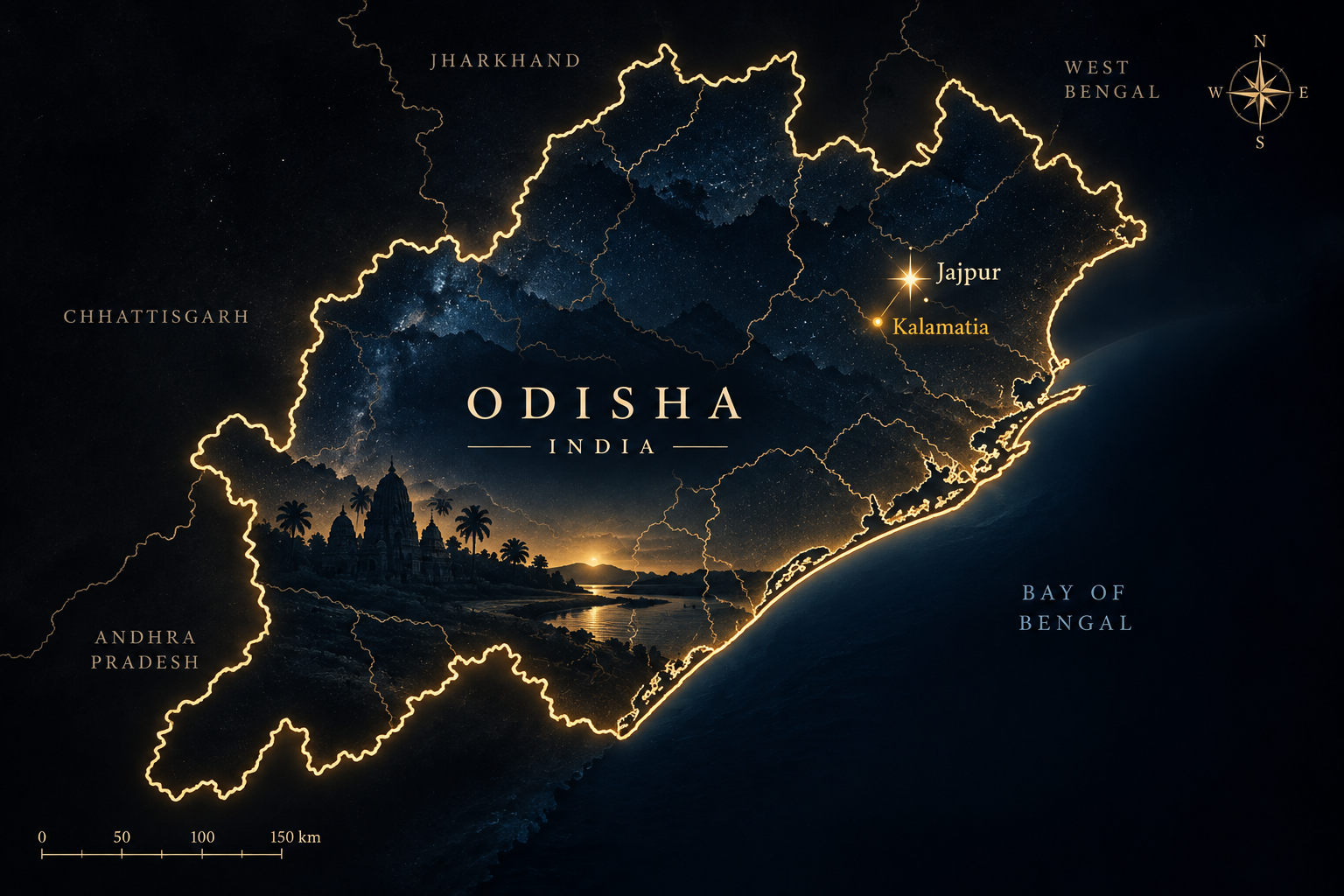
Odisha, India
My fascination with the night sky began long before I ever owned a camera. It began beneath the dark skies of a small village in Odisha, India.
I grew up in a small village in Odisha, India. Those were very different days. Electricity had reached our village, but it wasn't always reliable, especially during the hot summer months. Power cuts were frequent, and many evenings were spent studying under the soft glow of a lantern.
There were no smartphones in our hands, no tablets, and few of the digital distractions that surround us today. We spent much more time outdoors, and when night arrived, darkness truly meant darkness.
I often studied alone on the rooftop with a lantern beside me. But every now and then, in the middle of studying, curiosity would win. I would turn the lantern down—or sometimes turn it off completely—and let my eyes adjust to the darkness.
And slowly, the sky would come alive.
Above me was an enormous band of light stretching across the darkness, surrounded by more stars than I could count. At the time, I didn't really understand what I was looking at. I didn't know much about the Milky Way, galaxies, light-years, or astronomy. I only knew that there was something bright and mysterious illuminating a portion of the dark sky, and I wanted to understand what it was.
Sometimes the books could wait.
I would simply lie there on the rooftop and look up, wondering what that glowing structure was, how far away those stars might be, and what existed beyond everything I could see.
There was no astronomy app to point at the sky. No phone in my hand telling me the names of the stars. No camera beside me trying to capture the scene.
There was only curiosity.
Looking back, I realize that long before I learned about cameras, lenses, star trackers, or astrophotography, I was already observing the night sky in my own simple way.
When I turned down the lantern, another kind of light appeared.
That rooftop in Odisha is where my curiosity about the cosmos began.
02 / Returning home
The Sky That Faded
Years later, I returned to my hometown, hoping to reconnect with the night sky I remembered from childhood.
The village had changed. Electricity was now reliable. Homes, streets, shops, and buildings were illuminated through the night. These were signs of progress—things that made everyday life easier in so many ways.
But when I looked up, I realized that somewhere along the way, we had also lost something precious.
The darkness was no longer truly dark.
Even in the village, artificial light now spilled into the night sky. The Milky Way that had once stretched so clearly above our rooftop was no longer visible the way I remembered it. There were still stars, and the skies were nowhere near as bright as those over a large city, but the difference was unmistakable.
I stood there looking up at the same sky I had watched as a child, but it didn't feel like the same sky.
As a boy, I used to turn down my lantern so I could see more of the universe. Decades later, I found myself wishing, just for a moment, that all the lights around me could be turned down again.
Then another thought struck me:
What if I were a child growing up here today?
Would I ever notice the Milky Way? Would I become curious about that mysterious band of light crossing the sky? Would I lie on the rooftop wondering what those countless points of light were and how far away they might be?
I don't know.
The boy I once was knew almost nothing about astronomy. But he had something incredibly valuable above him every night—a dark sky.
He didn't need someone to tell him to become interested in the universe.
The sky itself invited him to be curious.
A new generation growing up beneath brighter nights may not always get that same invitation.
That, to me, is one of the quiet losses of light pollution. We don't only lose stars. We may also lose some of the moments of wonder, questions, and curiosity those stars can awaken in a young mind.
Development has given our villages so much, and I would never wish away that progress. But perhaps progress and darkness do not have to be opposites. Maybe we can learn to use light more thoughtfully—lighting what we need without unnecessarily lighting the sky above us.
Because sometimes a child simply needs the chance to look up.
Darkness is not an absence of something. Sometimes, darkness is what allows us to see.
03 / Chasing dark skies
Life Now and the Pull of the Universe
The years passed, life changed, and I eventually found myself thousands of miles away from the village where that curiosity began. But the pull of the night sky never really left me.
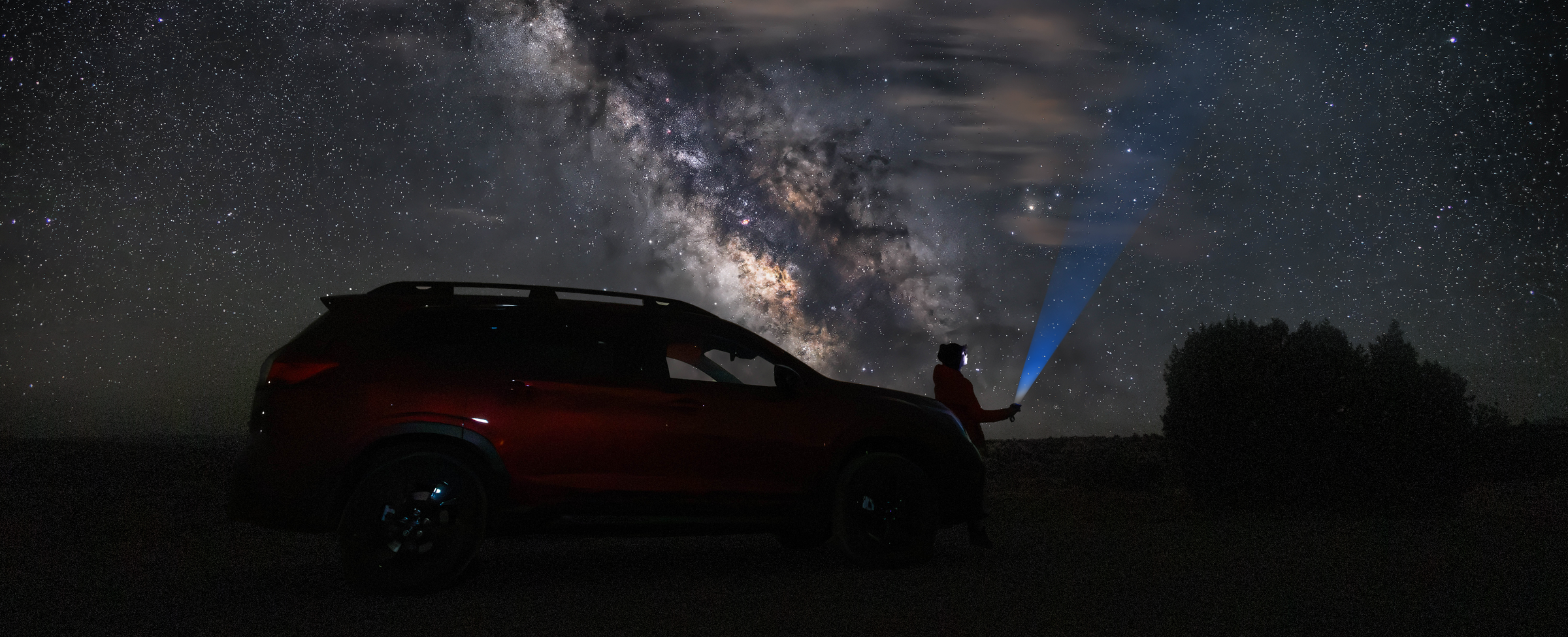
Today, whenever life gives me the opportunity, I pack my cameras, lenses, tripod, star tracker, camping gear, and backpack and head toward darker skies.
Sometimes that means driving for hours into the desert. Sometimes it means camping through the night, waiting in the cold, or watching clouds and hoping for a small opening in the sky. And sometimes it means traveling a long distance for a celestial event that may last only a few unforgettable minutes.
In a strange way, I am still doing what I did as that little boy on the rooftop.
Back then, I would turn down the lantern to make the sky darker.
Today, I drive away from the lights of cities to do the same thing.
Only now, there is a camera beside me.
Astrophotography, for me, has never been only about making beautiful photographs. The photograph gives me a reason to go—but the experience is what keeps bringing me back.
There is something deeply peaceful about standing beneath a truly dark sky in the middle of the night. The noise of everyday life disappears. The phone becomes unimportant. Time seems to slow down.
Sometimes I simply stand beside the camera while it is taking an exposure and look upward, just as I did when I was a child.
Some nights give me photographs I will keep forever. Other nights bring clouds, cold, wind, missed compositions, or nothing worth keeping at all.
But I have realized that even those nights are not failures.
The journey, the waiting, the silence, the landscape, and the experience of simply being there beneath the universe are memories of their own.
Perhaps that is what I have really been chasing all these years—not only photons reaching my camera sensor after traveling across unimaginable distances, but that same feeling of wonder I first experienced beneath the dark skies of Odisha.
The equipment has changed.
The places have changed.
But the reason I still look up hasn't.
04 / The journey continues
Still Looking Up
Chasing light beneath the darkest skies.
Astrophotography · Travel · Night Sky · Stories